Thursday, April 1, 2010

Gamma Rays, Harmful or helpful?


You may know about the electromagnetic spectrum in some sense but most people do not know the components. Gamma radiation is just one section of the spectrum. In fact it is the most energetic of them all with a wavelenth of just 10-11, and a frequency range of > 3×10^19. Although gamma rays and x-rays are thought to be quite similar, gamma rays are one of the most difficult to figure out. But don't get too close because ray bursts release more energy in 10 seconds than the sun will in 10 billion years.

In order to create these waves in space, extreme conditions have to occur. The source may be colliding compact objects like neutron stars or white dwarfs. Wave blasts also might happen from supernovae which exlode at the end of their lives. Although these blasts often happen, there is still some mystery as to where they are really coming from.
Some uses for this radiation is just how it sounds, radiation treatment. Gamma radiation is used for many medical reasons. When gamma rays pass through the human body it can damage human tissue, which might sound dangerous but for chemotherapy it is essential. Because these rays kill cell they use gamma rays to target the cancerous cells and destroy them from the body. Besides this use, gamma rays have been used to sterilize medical equipment, pastuerize certain foods, and improve the durability of woods.

So although scientists still are questioning where exactly these rays are coming from, we know they are the most energetic out of the entire electromagnetic spectrum, and so far we are putting it to good use.


Citations:
"Gamma-Ray." ESA Science & Technology. ESA, 3 Feb. 2005. Web. 5 Apr. 2010.

"Gamma-Rays." Electromagnetic Spectrum. NASA, 27 Mar. 2007. Web. 5 Apr. 2010


"Gamma Rays." Radiation Protection. U.S. Environmental Protection Agency, 23
Feb. 2010. Web. 5 Apr. 2010. gamma.html>.

Images:
Gamma Ray Observatory
Radiation symbols

Friday, January 15, 2010

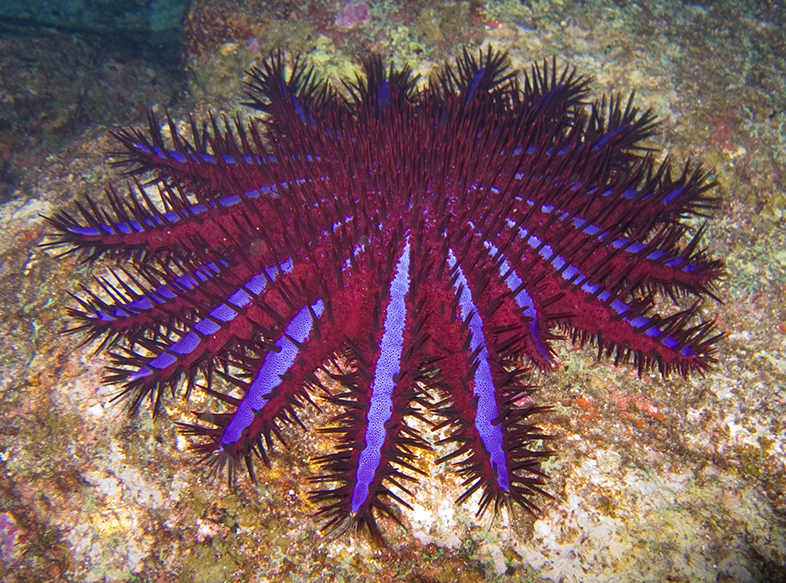
Marine Biologist: Not the study of the Army

(Image from Wikipedia)
A marine biologist is someone who studies, protects, and in some cases trains marine animals. Contrary to what people may think, a marine biologist does not just play with dolphins all day. There are many different fields such as microscopic life, marine invertebrates, fish, seabirds, reefs, and more. You may be observing marine organisms habitats, testing DNA, or collecting seaweed or sea sponges.

I particularly enjoy this subject because it has a lot to do with oceans, and lakes in which I have always enjoyed. Even when snorkeling I had found all of the various types of creatures fascinating. Also, the plant life and all of the different habitats and homes of the fish I found interesting and very cool to look at. The concept of Marine Biology is not just fun to think to work in because I may be able to swim around all day. But it is also very important to protect these creatures so many more people after me may look and observe them also. Which will effect future generations and their ability to study what we left behind. This career choice connects to my learning style because I am a hands on learner. Being able to go out into the water to hold and see things is part of how I learn and what I am interested in.

(Image from Wikipedia)
In order to practice marine biology I know that I would have to study subjects such as biology, chemistry, math, and a marine science class if possible. Zoology would also help. In most cases in order to get a job somewhere in marine biology you must have a Master's of Science degree in Marine Biology. As said by David Campbell, "I work with average people and some remarkable ones too." So according to him and other research this job has a lot of leeway and you can't put a name on exactly what you're going to do. However for me, if I were a scientist this is that kind that I would be. I am accomplishing my goals of helping to better the oceans, and studying them for more people like me, who want to know more about marine life.